
FYI: There are some affiliate links in this post, so if you purchase something after clicking on a link, I may make a small commission. This helps to support the running of this website, so thanks!
Jump to Recipe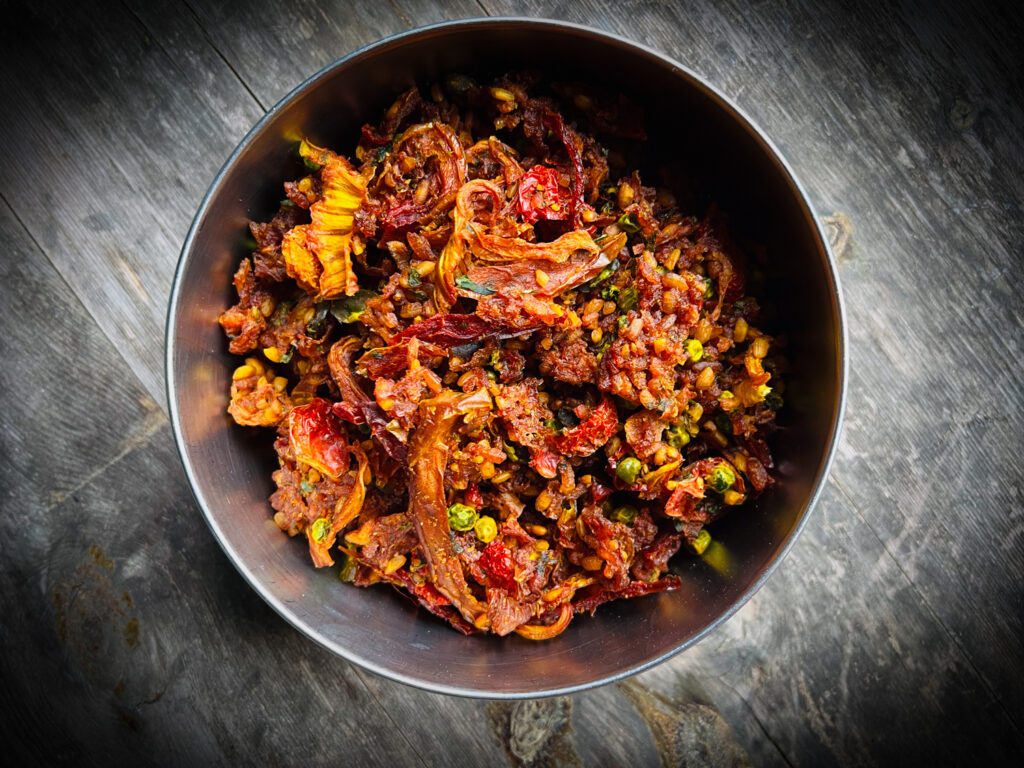
To know me is to know that I am a Yotam Ottolenghi fangirl. I first came to know of this Israeli-born chef through his cafe in Islington, London, where I lived at the time, and then as the author of “the new vegetarian” column in the Guardian. His approach to vegetarian cooking was truly enlightening in how he made veg-forward cuisines accessible to the home cook. I was even lucky enough to learn from him personally through my work at The Vegetarian Cookery School in Bath.

Enter this vegetarian paella, inspired by his excellent cookbook Plenty, adapted for the dehydrator. Instead of the usual seafood that you find in traditional paella, he’s replaced it with a load of vegetables (especially fennel which I love) and savoury artichokes and olives. It all gets cooked with sherry in a saffron and smoked paprika broth for something really special. And as a rice and vegetable dish, it’s ripe for adaptation as a homemade dehydrated backpacking meal.
Why This Vegetarian Paella Works for Backpacking
Dehydrating vegetarian meals is generally easier than their meat-based counterparts because vegetables and legumes rehydrate more reliably and carry less food safety risk. This paella recipe takes full advantage of that, using ingredients that not only dehydrate well but also maintain their texture and flavor when reconstituted at camp. For optimal dehydration, slice the vegetables thinly or dice finely.

If you’re new to making homemade dehydrated backpacking meals, this recipe is a great place to start. The process is similar to other rice-based dehydrated meals like this vegetarian jambalaya or dehydrated Mexican rice (arroz rojo).
Adding Protein on the Trail
While this vegetarian paella is satisfying on its own, you can of course add extra proteins or fats. My favourite addition is sliced up fried chorizo – chorizo packs well and you can cook it slowly in a dry pan which renders out the fat and allows you to fry the chorizo til crisp.
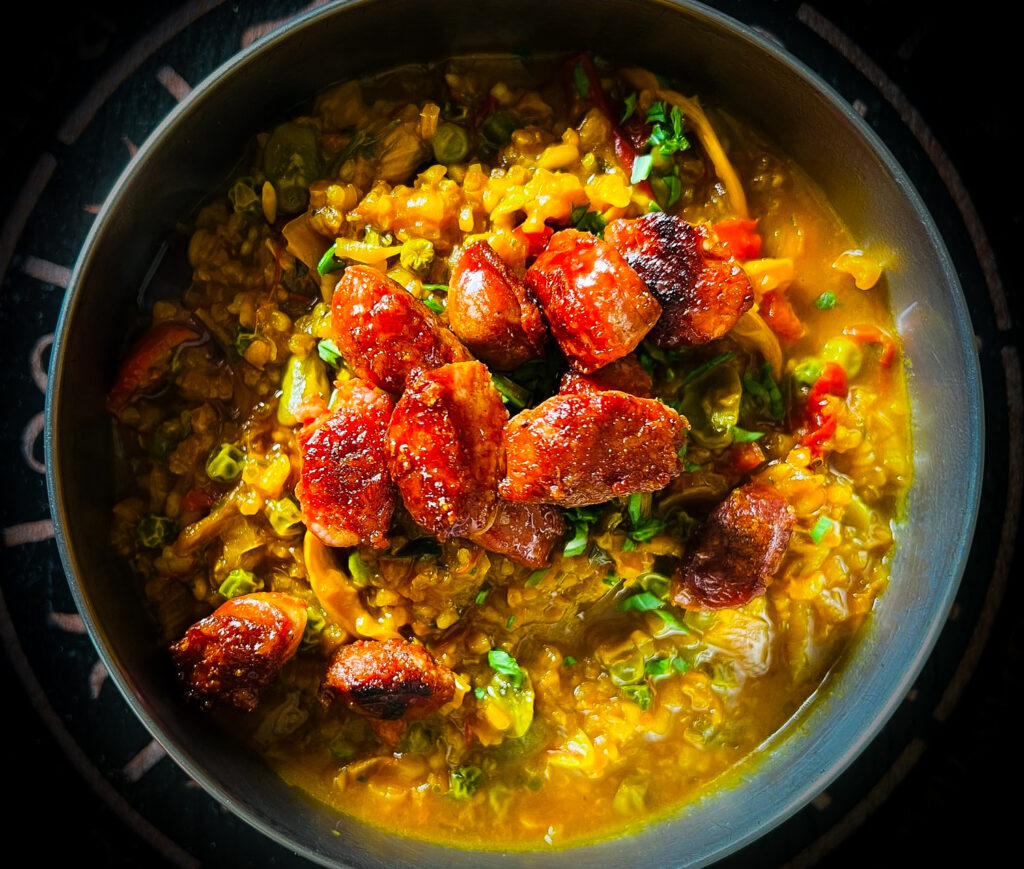
if you want to add a seafood element while backpacking, consider packing some shelf-stable options like foil packets of tuna or salmon. You can also dehydrate seafood, though I haven’t tried this (it just doesn’t appeal!). These lightweight additions can be stirred in after rehydration to give you that traditional paella experience without the dehydration challenges of fresh seafood.
Shelf Life and Storage
Properly dehydrated and stored in a zip-lock freezer bag, this paella will keep for 2–4 weeks at room temperature, or up to a year vacuum sealed in a cool, dark place. Make sure everything is fully brittle and dry before bagging — peas and tomatoes are the most likely culprits for residual moisture.
For longer storage, reduce the olive oil in cooking and omit the artichokes and olives — both are packed in oil and will shorten shelf life. Add a drizzle of oil at camp instead to get the flavour back.
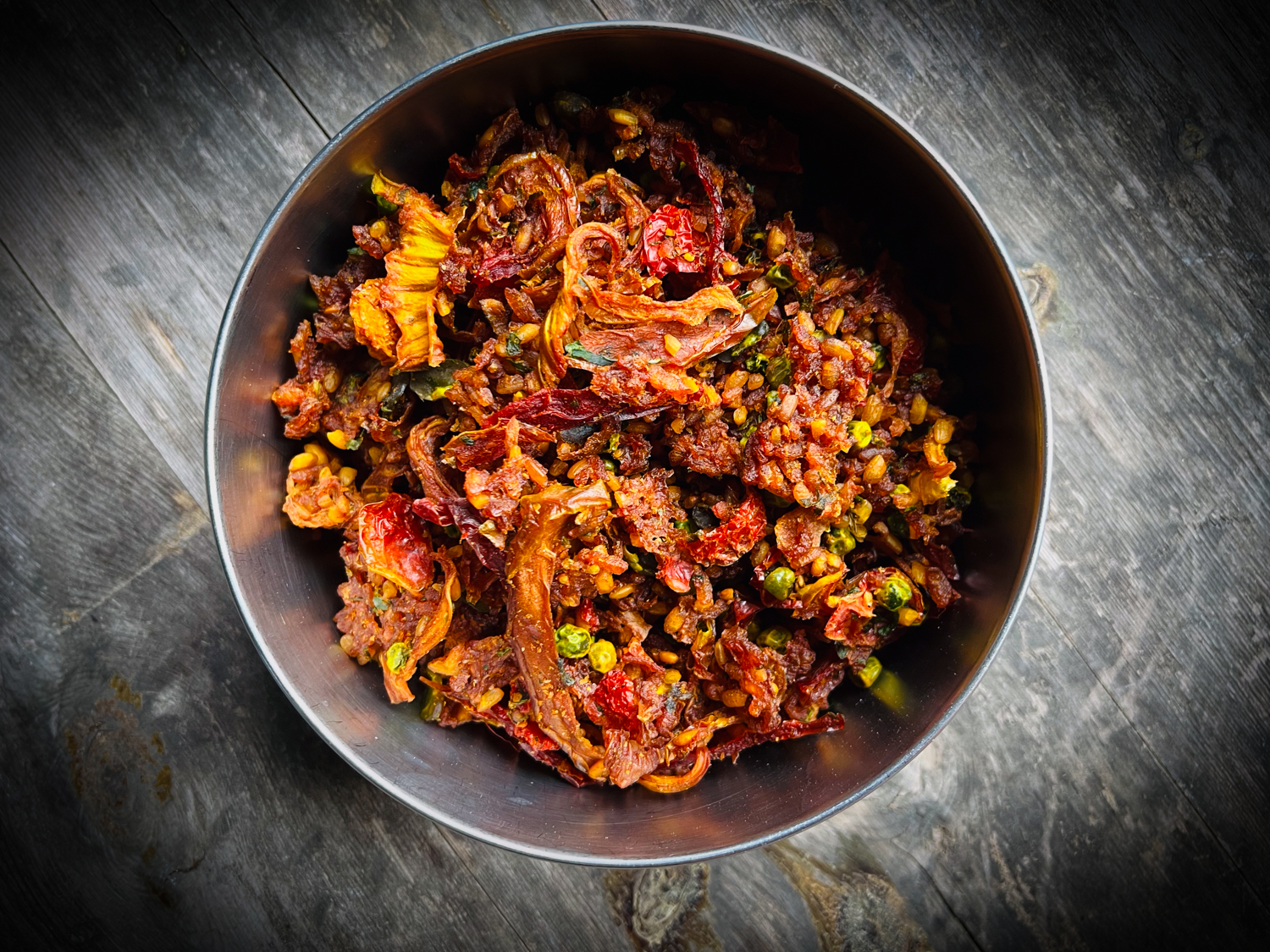
Vegetable Paella – Vegetarian Backpacking Meal
Ingredients
Method
- Heat the oil in a large, shallow frying pan, then gently fry the onion for five minutes.
- Add the peppers and fennel, and fry over medium heat until soft and golden – about eight minutes.
- Add the garlic, cook for a minute, then add the bay leaves and spices, stir.
- Add the rice and cook, stirring, for two minutes.
- Add the sherry and saffron and bring to a boil for a minute, then add the stock and a pinch of salt. Reduce the heat to very low and simmer for 20 minutes, or until most of the liquid has been absorbed. Avoid stirring the rice from this point as that will result in a gloopy paella (not ideal). Taste and add salt if needed.
- Remove the pan from the heat. Scatter the tomatoes, artichokes, peas, and olives over the rice, cover and let rest for another 10 minutes.
- Now scatter over the parsley. If you’re having some now, it’s ready to serve. Otherwise, leave to cool before dehydrating.
- Spread the paella in thin, even layers on dehydrator trays lined with silicone sheets or baking paper.
- Dehydrate at 63°C / 145°F for 8–10 hours – stir/flip halfway through to speed things up and encourage even dehydrating..
- The paella is ready when completely dry and brittle — no soft or sticky spots.
- Cool fully before storing.
- Portion into zip-top freezer bags or vacuum-seal for longer storage.
- Place one portion of paella in your pot and add just enough water to cover the paella.
- Bring to a boil, stir thoroughly, then turn off the heat, cover and let sit for 10 minutes, ideally in a cozy or something to keep it warm.
- Give it a stir and taste – if any bits are still chewy, wait another five minutes, or give it another blast with the stove (my preferred method as I like my paella piping hot). Add more water if needed to suit your desired consistency.
- Fuel saver tip: you can cold soak this by putting the paella in a flask at the start of the day with enough water to cover. It will rehydrate throughout the day. When you get to camp, decant into a pot and heat through. Enjoy!
Trail Garnishes and Flavor Boosters
One of the joys of paella is the bright, fresh elements that balance the rich, savory rice. While you can absolutely enjoy this dehydrated version as-is, packing a few simple garnishes can elevate your trail meal to restaurant quality:
- Fresh lemon wedges: If you’re only out for a few days, a small lemon weighs almost nothing and adds incredible brightness. Just squeeze it over your rehydrated paella before eating.
- Fresh herbs: Parsley is traditional for paella and stays fresh for several days in a small zip-lock bag. Cilantro works well too if you prefer that flavor profile.
- Salsa macha: For those who like heat with complexity, pack some salsa macha in a mini Nalgene —that incredible Mexican chili oil loaded with nuts and seeds. It adds a smoky, spicy kick that complements the Spanish flavors surprisingly well.
- Dried lemon peel: If fresh lemon isn’t an option, dehydrate some lemon zest before your trip and pack it separately to add when rehydrating.
- Olive oil packet: Especially good Spanish olive oil. This is paella after all!
Get the FREE Quick Guide to Dehydrated Meals
Download my free practical and delicious approach to homemade dehydrated meals + 5 easy adaptable recipes to get you started. Enter your email below and I’ll send you a link to download the 20-page PDF.
By subscribing, you agree to recieve occasional emails from me. Don’t worry, you can unsubscribe any time!

 Camping Quesadillas
Leave a Reply